Fort Myers “Lords of Chaos” Crime Spree
Lords of ChaosThe Fort Myers “Lords of Chaos” Crime Spree was a campaign of arson and escalating violence by six male teenagers in Fort Myers, Florida, in April 1996. It culminated in the killing of high-school band director Mark Schwebes, whose attempt to stop the group on school grounds brought him into direct conflict with its members. The episode’s significance in the book lies not only in the crimes themselves, but in the way the teenagers cast their actions as a public war and borrowed an apocalyptic vocabulary that resembled rhetoric from Norwegian Black Metal, despite showing no overt signs of Satanism.
Background and the Group’s Self-Image
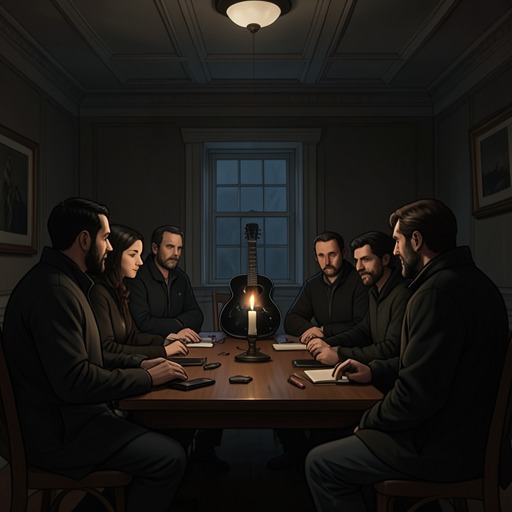
The group called itself the Lords of Chaos and described itself as a militant anarchist organization. It consisted of Kevin Foster, Derek Shields, Peter Magnotti, Christopher Black, Christopher Burnett, and Thomas Torrone. Foster, who was 18, led the group; the others reportedly referred to him as God. Investigators later found that members kept weapons in their cars and homes. Their self-description as a militia gave their crimes a theatrical political frame, but the evidence presented also shows a group of teenagers moving from vandalism and arson toward increasingly dangerous attacks.
The book places the Florida events beside the Norwegian Black Metal scene of the early 1990s, where bands and associates gathered around Øystein Aarseth and the record shop he made a focal point. People sought acceptance within a tightly ranked scene, and one account describes the powerful atmosphere of belonging that could form around shared attitudes and symbols. A participant in the Norwegian scene also recalled that church burnings could make members feel bound together by a common act of destruction. These parallels help explain the book’s comparison, but they do not establish that the Fort Myers group was organized by, or directly connected to, the Norwegian scene.
The comparison is chiefly one of language and posture. The Lords of Chaos disrespected Christianity and adopted a grand, apocalyptic register similar to statements associated with Varg Vikernes and other figures in Norwegian Black Metal. They took credit for crimes and threatened greater violence. The account nevertheless explicitly distinguishes them from overt Satanism: the resemblance rests on shared rhetoric, destructive spectacle, and the desire to present criminal acts as a challenge to society, not on evidence that they belonged to a Satanist group.
Escalation in April 1996
The account dates the start of the crime series to April 13. The teenagers first burned a supermarket construction trailer, then set fire to a Baptist church. They next spread gasoline around a tropical aviary beside a theme restaurant and ignited its thatched-roof structure, killing the collection of exotic birds inside. The sequence widened the scale of destruction: from property used for construction, to a church, to a setting where the consequences extended to animals as well as buildings.
Their next attack targeted a deserted former Coca-Cola bottling plant. The group placed propane tanks inside, withdrew, and threw a Molotov cocktail into the building. The resulting explosions nearly destroyed the structure while the teenagers watched from across the street. Six days later, they carried out an armed robbery while masked and carjacked a vehicle outside another restaurant. The shift from setting fires to using explosives and carrying out an armed robbery marks a clear escalation in both the methods and risks of the spree.
A manifesto recovered by police offers the group’s own account, but its chronology differs from the narrative of the crime series. It says the campaign began on the night of April 12 with theft and damage to county vehicles, followed by further vandalism and arson. It describes fires at a site called The Hut, a construction site, and a church, and says that the group tested how quickly firefighters would respond. The manifesto also describes the arsonists using an ordinary cigarette lighter to ignite a trailer and a bus. Rather than treating this document as a neutral record, the book presents it as a taunting claim of responsibility: the teenagers turn their acts into a staged announcement of power and future threats.
Schwebes’s Killing and the Arrests
The spree ended in a confrontation on April 30, which the account identifies as Walpurgisnacht. At about 11 p.m., Schwebes, the school’s marching-band director, encountered the teenagers on school grounds and confiscated cans of peaches they were preparing to throw through the windows. He ordered them to go home and warned that a school deputy would visit the following day. Investigators later determined that the group had actually been preparing to burn down the school; the cans of peaches were a misleading detail that initially obscured the danger.
A few hours after the confrontation, Schwebes answered a knock at his front door. Shields, who belonged to the Riverdale school band and could ensure that Schwebes would recognize him, was the member who approached the door. Once Schwebes opened it, Shields signaled Foster, who fired a shotgun. The book reports that Foster then fired a second shot because the group believed Schwebes was homosexual. This account makes the killing more than a sudden continuation of the school-ground encounter: the teenagers used Shields’s familiarity with the teacher to bring him to the door, and the attack reflected the group’s willingness to turn suspicion and prejudice into lethal violence.
Three days later, police arrested key members of the group as they were heading to rob a restaurant where two of the teenagers worked. Investigators said the plan was to kidnap the manager and shoot anyone who tried to intervene. The arrest therefore interrupted a further planned attack, rather than simply ending a series of past crimes. Shields later pleaded guilty to murder and agreed to testify against two co-defendants in exchange for life imprisonment without parole, avoiding the death penalty.
Intended Mass Violence and the Event’s Meaning
The group’s plans extended beyond the crimes already committed. For a graduation-night visit to Walt Disney World, they intended to steal life-sized cartoon-character costumes, wear them in the park, and randomly kill Black tourists with handguns equipped with silencers. The sheriff cited in the account doubted that the plan could have proceeded smoothly under the park’s security, but warned that the teenagers might have responded violently if stopped. The plan reveals that the spree’s ambition was not limited to destruction of property or attacks on people who challenged the group: it included a proposed mass killing aimed at random visitors on racist grounds.
The manifesto intensifies that threat by presenting the teenagers as a formidable, growing militia and promising destruction on a biblical scale. Its boastful claims sit uneasily beside the concrete course of events: the group’s plans were repeatedly interrupted by authorities, and its leaders were arrested while preparing another robbery. The book’s comparison with Norwegian Black Metal thus points to a pattern of self-mythologizing and communal identity built around transgression, while the event’s actual record shows how quickly theatrical declarations became arson, armed crime, and murder. The group’s violent campaign ended in arrests, but its manifesto and intended attacks preserve the gap between its grandiose image of power and the real consequences of its actions.